
Follow us


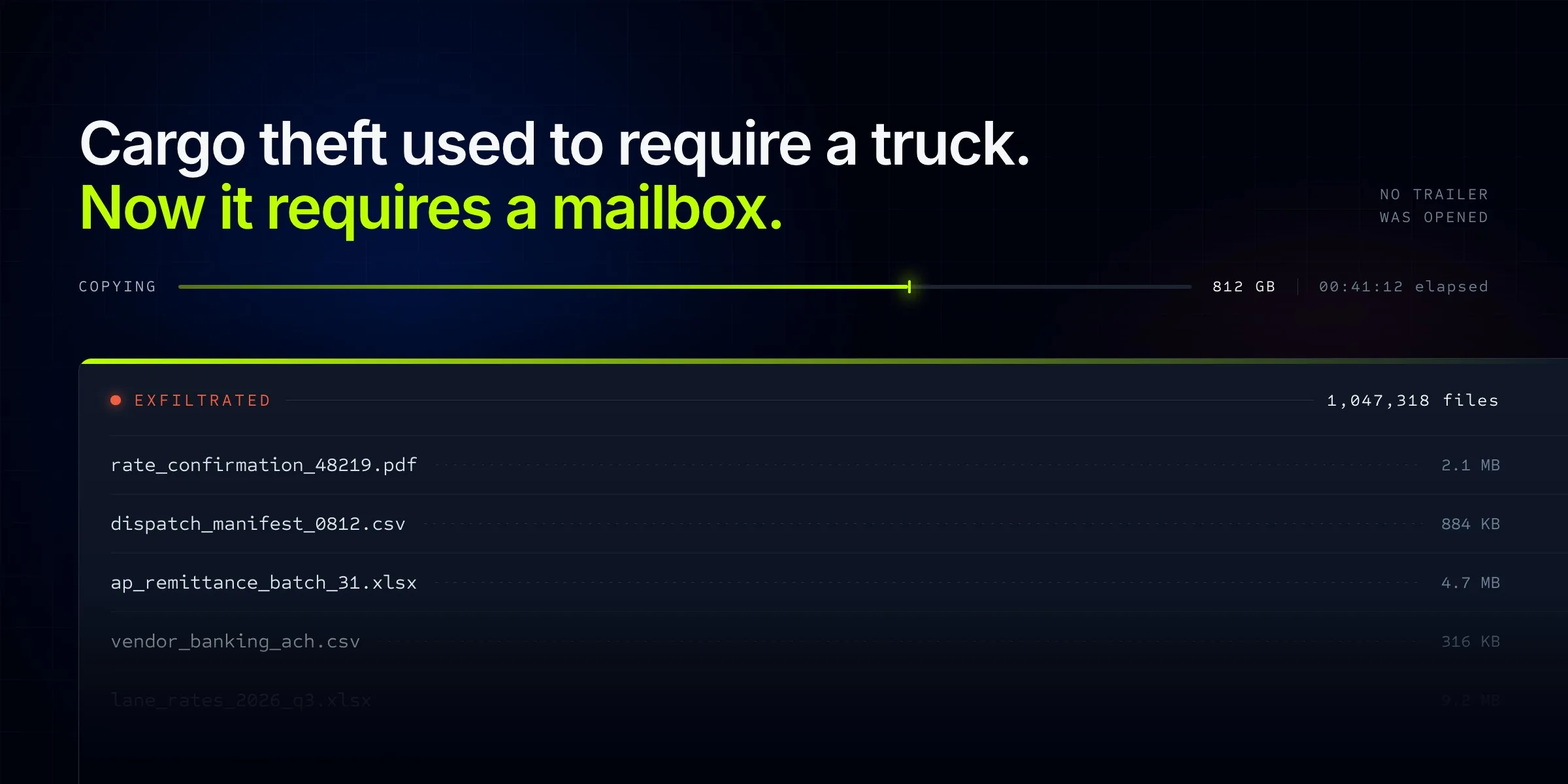
Freight platforms have become prime targets for hackers because of what they hold: rates, lanes, dispatch records, payment files, and the email trails connecting shippers, carriers, and brokers. A breach claim against one of the industry's largest digital freight platforms this week fits an accelerating pattern. For shippers, the exposure is downstream: stolen freight data becomes raw material for impersonation and payment fraud, so vendor security questions and out-of-band verification now belong in every freight operation.
This week's freight security story didn't involve a stolen trailer. It involved roughly a million files.
The most recent example is Uber Freight. A hacking and extortion group claims to have breached the platform, one of the industry's largest, posting the claim to its leak site and saying it took roughly a million files: email mailboxes, cloud storage drives, accounts payable files, and dispatch documents. Uber Freight has said it is investigating a data security incident involving unauthorized access to part of its systems, that the incident was identified, contained, and remediated, that federal law enforcement is engaged, and that operations continue without disruption. The claims remain unverified, and that caveat matters. But the pattern is verified beyond doubt: the group behind it has been working through transportation companies in recent weeks, and threat researchers at Google tie it to a broader collective that collected more than $10.6 million in extortion payments in just the first five months of 2026.
No one in freight should enjoy this news. Every company in this industry, ours included, holds data someone would like to steal. The useful response isn't schadenfreude. It's understanding why freight data became the target, and what that means for the shippers whose information lives inside these systems.
Because the industry spent a decade concentrating exactly the data criminals monetize best.
Think about what flows through any freight platform, TMS, or brokerage system: contracted rates and lane histories. Dispatch records with pickup times, facilities, and commodities. Accounts payable files with banking details and payment cadences. And above all, the email threads connecting shippers, carriers, and intermediaries, the raw material of trust in this industry. That combination is worth more than most cargo. It's a targeting package.
The methods match the prize. The group behind this week's claims is known for social engineering, including calling IT help desks by phone and talking staff into resetting employee passwords, voice as the attack vector, aimed at the humans around the systems rather than the systems themselves. Once inside a cloud environment, exfiltration is quiet and industrial-scale: not one shipment stolen, a million files.
If that voice-as-weapon pattern sounds familiar, it should. It's the same escalation reshaping freight fraud across the industry, one we broke down in The Voice Is Real. The Carrier Isn't., and a breach anywhere in the freight stack feeds it: stolen mailboxes and dispatch documents are precisely what make the next impersonation convincing.
Here's the uncomfortable part: when a logistics provider is breached, the exposed data is largely its customers'.
Dispatch documents describe shippers' freight, facilities, and schedules. Payable files carry carriers' and vendors' banking details. Email archives contain every negotiation, rate confirmation, and contact a fraudster needs to impersonate someone you already trust. The company that got breached absorbs the headline; the companies in the data absorb the follow-on risk, which typically arrives as highly convincing phishing, payment-change requests, and carrier or broker impersonation in the weeks and months after.
That's why an industry breach is a shipper problem even when it isn't your vendor. The stolen material raises the quality of fraud attempts against everyone, because the attackers now write with real context: real lane names, real contacts, real invoice formats.
Four moves, none of which require a security team.
None of this is panic. It's the freight version of locking the cab: unglamorous, procedural, and the difference between being in the blast radius and being a casualty.
Why do hackers target freight and logistics companies?
Because freight systems concentrate high-value data: contracted rates, dispatch records with facilities and schedules, payment files with banking details, and email archives connecting shippers, carriers, and intermediaries. That material supports both direct extortion and downstream fraud like impersonation and payment redirection, making logistics one of the sectors extortion groups now work through systematically.
Does a breach at a freight platform affect its customers?
Yes, often more than the platform itself. The exposed files largely describe customers' freight, contacts, and payments, which fuels convincing phishing, payment-change fraud, and carrier or broker impersonation against those companies in the following months. The headline belongs to the breached provider; the follow-on risk belongs to everyone in the data.
What should shippers ask freight tech vendors about security?
At minimum: what security certifications and audits they maintain, how access to customer data is controlled and logged, what their incident response and customer notification commitments are, and what data of yours they retain and for how long. Treat the answers as part of vendor selection, alongside rates and service.
How can shippers protect against fraud after an industry data breach?
Confirm any change to banking details, contacts, or payment instructions through a channel already on file rather than the one making the request, brief accounts payable and operations teams that post-breach phishing arrives with real context and clean grammar, and weight carriers' and partners' accumulated track records over documents, which can be forged or stolen.
Cargo theft used to require a truck. Now the highest-value freight in the industry is the data describing it, and this week was a reminder that the people stealing it have industrialized.
Shippers can't control which platform gets hit next. What you control is procedural: vendors held to custodian standards, payment changes verified out of band, teams briefed for smarter phishing, and trust placed in track records instead of paperwork. The trailer lock of the data era is a callback to a number you already had. Use it.
 SOC 2 Type II