


How contract benchmarking works in Emerge
- Start from the lane file of your last bid: origin, destination, equipment, volume and the contract rate on each lane.
- Compare each lane with market data for the same lane, equipment and time window.
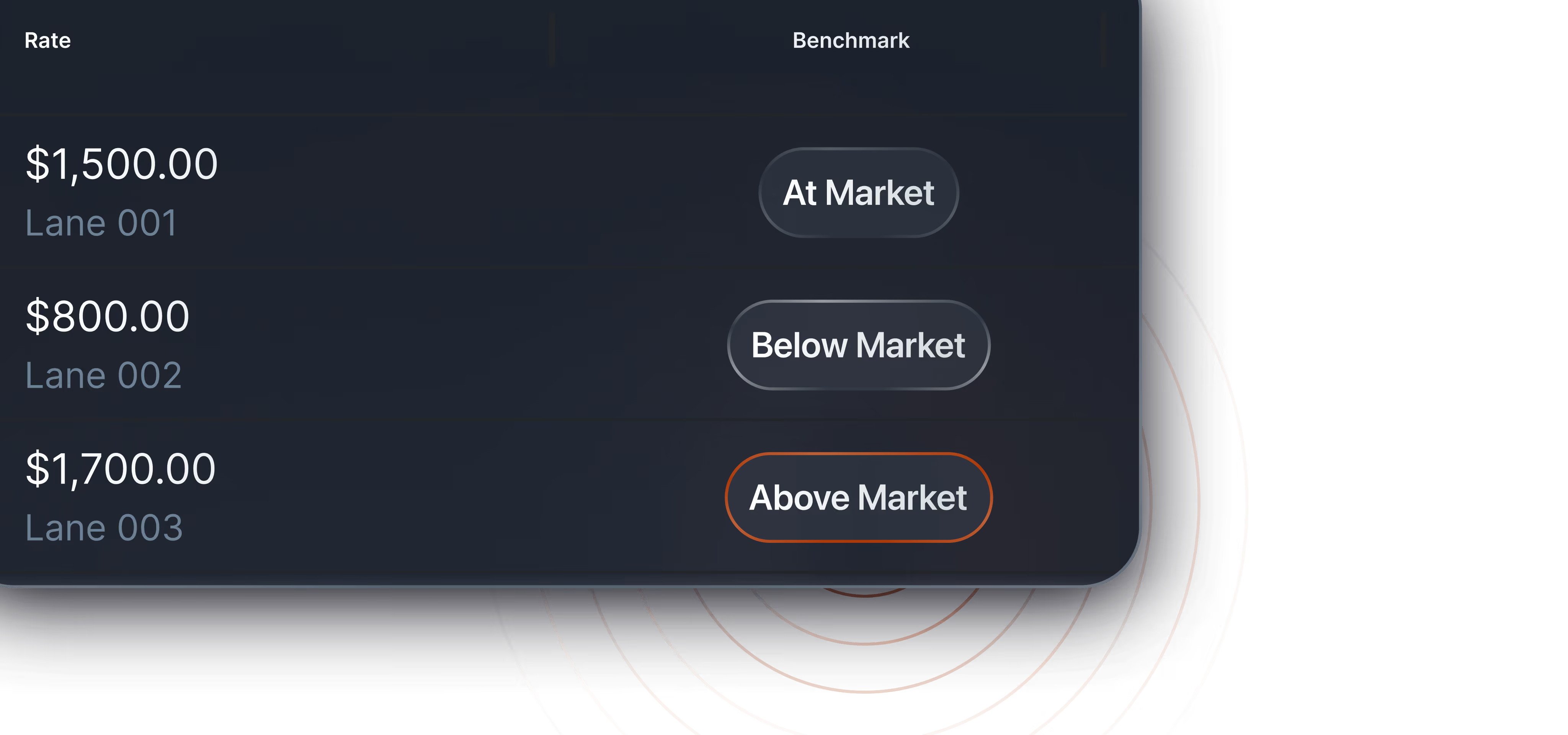
- See which lanes sit above, at or below market, and which ones are underperforming.
- Create a bid event for the lanes that need it directly from the benchmark report, often as a mini bid.
- Benchmark again every month, so drift is caught before carriers start rejecting tenders.
Which data contract benchmarking uses
Emerge uses DAT truckload rate data for contract benchmarking. DAT is the exclusive branded truckload rate benchmarking provider for the Emerge Dynamic RFP platform, so the benchmark appears inside the bid workflow. FreightWaves SONAR market data is available through Emerge data partners, and every bid you run adds your own carrier quotes per lane.
For the full method and the thresholds that should trigger a rebid, read how freight rate benchmarking works.
Frequently asked questions
Can software benchmark contract carrier rates?
Yes. A procurement platform with a rate data partner can compare every contracted lane with market rates inside the bid workflow. Emerge uses DAT truckload rate data for contract benchmarking, flags the lanes that are out of line, and lets you open a bid event on them directly from the benchmark report.
What is contract benchmarking?
Contract benchmarking compares your contracted lane rates with what other shippers are paying under contract for the same lanes, and with the current spot market, to find lanes that are out of line and should be rebid or renegotiated. Done monthly, it catches drift before carriers start rejecting tenders.
How often should shippers benchmark contract freight rates?
Monthly. Rates that were at market at award can drift 15 percent or more within a few months in a moving market, and that drift shows up first as tender rejections. Benchmark before, during and after the annual RFP, and every month in between.
When should a benchmark result trigger a rebid?
When the spot to contract spread on a lane reaches 15 percent or wider in either direction, or when tender acceptance stays below your threshold for two consecutive months. Rebid those lanes in a mini bid instead of waiting for the next annual RFP.


 SOC 2 Type II