
Follow us


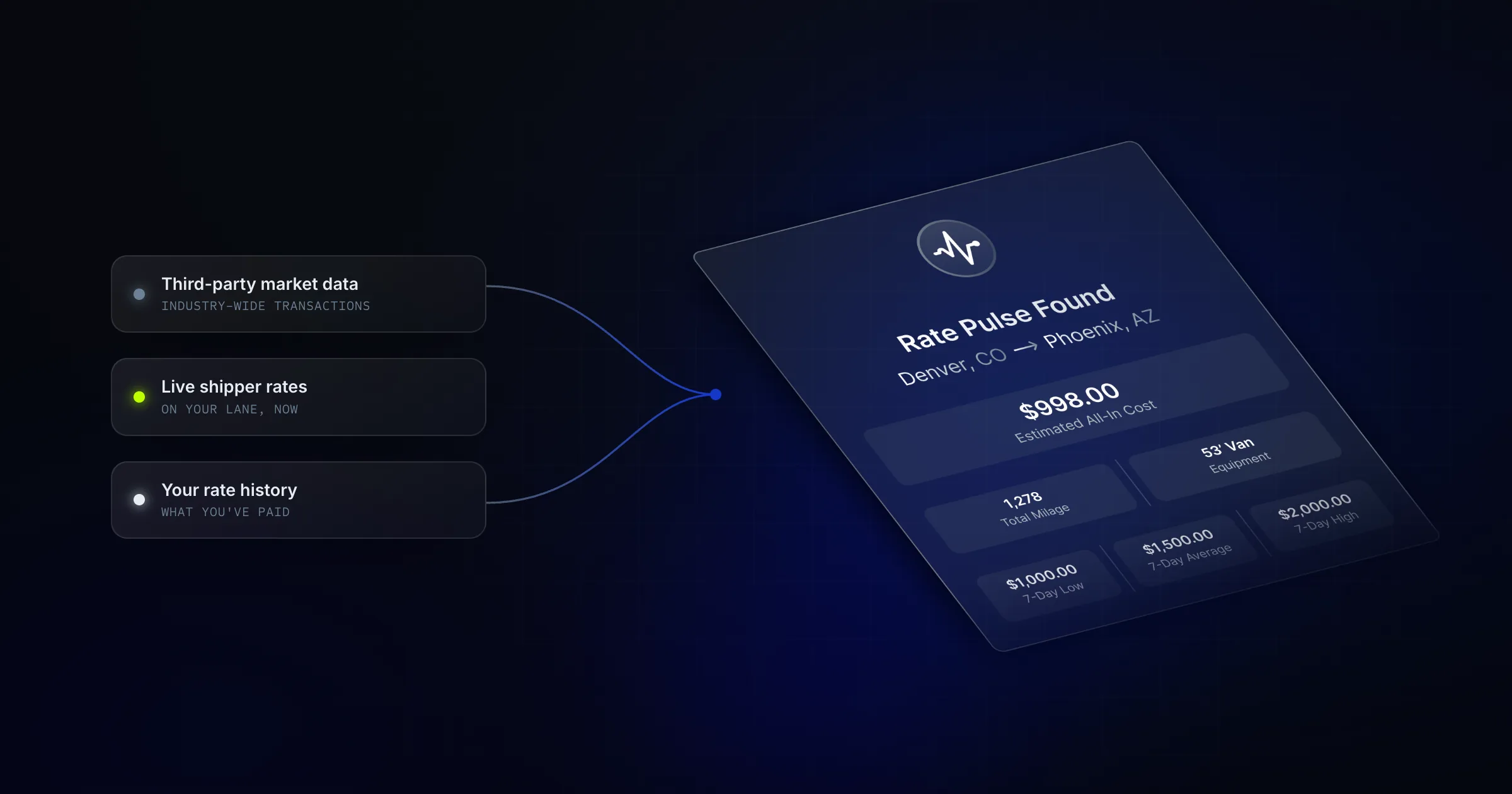
A spot rate estimate is calculated by blending recent transaction data on a specific lane. Rate Pulse, Emerge's benchmark, combines third-party market data, live rates from other shippers moving freight on the same lane, and your own shipping history. The result is a lane-specific range, not a national average.
A carrier sends back a rate. Now comes the only question that matters: is that number fair?
Most shippers answer by feel. The more disciplined ones do homework. One told us that when he asked for quotes, the response was always the same: what price do you want it to be? So he checks the market before every negotiation.
That instinct is right. The problem is that most shippers are checking a number they can't see inside. If you're going to trust an estimate, you should know how it gets made.
So let's open it up.
A spot rate estimate is a data-driven benchmark of what a load should cost to move on a specific lane right now… not what it cost last quarter or what it costs nationally. This lane, this equipment, this week.
It's different from a contract rate, which is a price you've locked with a carrier for repeated freight. Spot estimates exist for the loads outside those agreements, where the price gets set in the open market and can move week to week.
One thing a good estimate is not: a single magic number. Lanes have ranges. The point of a benchmark is to show you where that range sits so you can judge every quote against it.
The short answer: by blending recent transaction data from more than one source. The blend is what makes or breaks the estimate.
Rate Pulse, the benchmark built into Emerge, blends three kinds of data:
Why blend at all? Because each source alone has a blind spot. Third-party data is broad but generic. Your own history is specific but thin, and it goes stale the moment the market moves. Live transactions from other shippers are current but need the wider context. Together, they correct for each other. How much each source contributes varies by lane, depending on how deep the data runs.
And the output is lane-specific, not a national average. A dry van rate from Dallas to Atlanta tells you nothing about Fresno to Denver.
You compare the quote to a current, lane-level benchmark at the moment you book.
Here's what doesn't work. Checking rates once a month, the way one shipper described doing it just to make sure we're not getting ripped off. While the discipline is admirable, the cadence is the problem. Spot pricing moves weekly or faster, and a benchmark from three weeks ago can wave through a bad rate today.
Gut feel doesn't always work either, especially now. Analysts are telling shippers to budget for higher linehaul costs in 2026, particularly on volatile lanes. Nobody is paying less than they did last year. The test now is whether you're beating the market rate on every load, and you can't beat a number you never see.
This is also why a benchmark has to live where you book. An estimate in a separate tool, checked occasionally, is trivia. An estimate sitting next to every quote is leverage.
Averages lie when the inputs are messy. Three things to watch:
Outlier loads. A last-minute recovery load booked at a panic price doesn't represent the lane, but it can drag an average up. Good benchmarks identify and handle outliers instead of letting one bad data point set your expectations. We've covered how outliers distort freight data before, and the same logic applies here.
Equipment and lane mix. A reefer rate is not a dry van rate, and a headhaul is not a backhaul. An estimate that doesn't separate them isn't an estimate, it's noise.
Stale data. The fresher the transactions behind the number, the more you can trust it. Ask any benchmark provider one question: how recent is this?
Knowing the market changes how you buy.
In a study of shippers using Dynamic Book It Now, which auto-books spot loads between a floor and a ceiling tied to the benchmark, 85% of users secured rates below market. The average ran 8.5% below the market rate, and the best performers hit 23% below. Dollar Tree, booking against the benchmark at enterprise scale, runs 1.9% below market on average.
Pepsi Bottling Ventures put the why simply: real-time market rates are vitally important in today's market.
Notice what none of that requires: squeezing carriers. A benchmark doesn't make rates cheaper, it makes them honest, on both sides of the negotiation. Carriers quoting against a visible market number win loads on competitiveness, and shippers stop paying for what they can't see.
It also pairs naturally with getting your quoting out of spreadsheets and email in the first place, because a benchmark only helps if it's in front of you when the quote is.
Is a spot rate estimate national or lane-specific?
Lane-specific, if it's worth using. National averages are directional at best. Rate Pulse calculates estimates at the lane and equipment level, because that's the only resolution where a benchmark can actually inform a booking decision.
What data powers Rate Pulse?
Three kinds of sources: industry-wide third-party market data, live rates from other shippers moving freight on the same lane through Emerge, and your own rate history on the lane. The weight each carries varies by lane, based on the depth of data available.
What is a good freight rate benchmark for a lane?
One built from recent, lane-level transactions, separated by equipment type, with outliers handled, and visible at the moment you book. If a benchmark is missing any of those four, treat it as context, not truth.
Does the estimate include fuel and accessorials?
What a rate includes varies by tool, so always check before comparing. Holding an all-in quote against a linehaul-only benchmark makes every rate look high. For what actually sits inside a truckload rate, from linehaul to fuel to accessorials, we've broken down the full cost structure here.
For more FAQs →
You can't control the market. But you can know it.
Every shipper already has the instinct. Do the homework, check the number, push back when something looks off. A spot rate estimate just makes the homework automatic, on every load, at the moment it counts.
The shippers running below market this year aren't lucky, they're just never quoting blind.
Ready to reinvent your procurement strategy?
 SOC 2 Type II