
Follow us


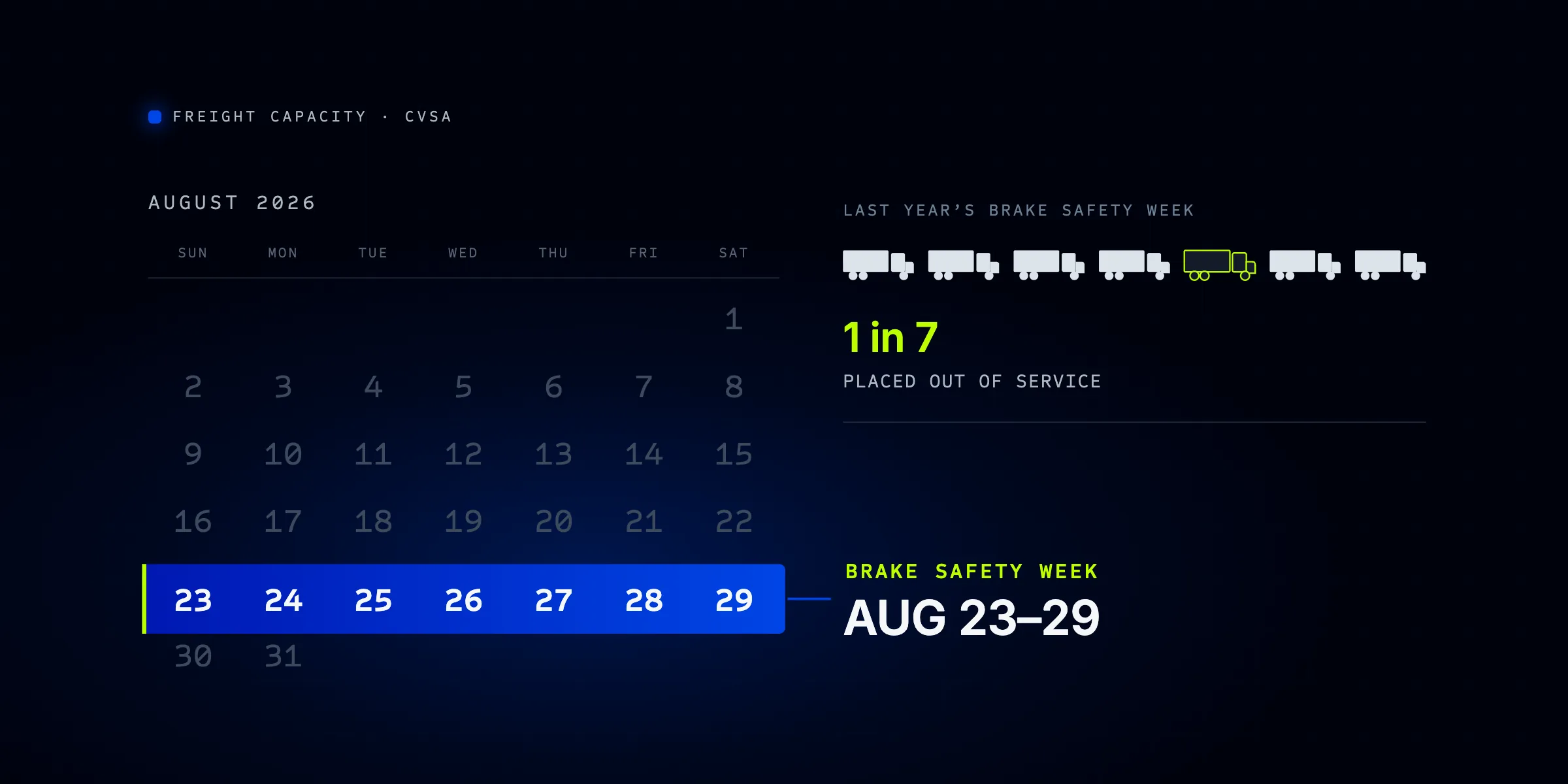
CVSA's Brake Safety Week runs August 23-29, 2026, with inspectors across North America focusing on brake drums and rotors. It thins truckload capacity two ways: trucks with brake violations are placed out of service until repaired, and some carriers schedule around the week entirely. Last year roughly 1 in 7 inspected trucks were sidelined. In a market with little spare capacity, shippers should have backup coverage in place before the week starts.
Most of the things that tighten freight capacity don't send a save-the-date. This one does.
The Commercial Vehicle Safety Alliance has set this year's Brake Safety Week for August 23-29, a seven-day inspection blitz across the U.S., Canada, and Mexico, with special emphasis on brake drums and rotors. To be clear, it's a good thing: brake violations are among the leading reasons trucks get placed out of service, and safer equipment protects everyone on the road. But it also, predictably, takes trucks off the road for one specific week. For shippers, that's a rare gift: a capacity dip you can see coming a month out.
Two ways, one visible and one quieter.
Out-of-service orders. Any truck found with a brake-related violation is sidelined until it's repaired. That's not a small number: in last year's Brake Safety Week, CVSA inspected more than 15,000 vehicles and placed 15.1% out of service for brake violations, roughly one in seven. A one-day unannounced brake blitz this April sidelined a similar share. Every one of those trucks is a load delayed and a unit out of the capacity pool.
Carriers scheduling around the week. Announced enforcement pushes fleets to fix equipment beforehand, which is the point. But some operators, especially smaller ones who can't absorb a surprise out-of-service order, simply plan maintenance or home time for that week. The industry sees this pattern around every announced inspection event: posted capacity dips during the blitz and rebounds after.
Add them up and the week of August 23 will have measurably fewer available trucks than the weeks around it. Tender rejections tick up, spot rates firm, and loads that would have covered easily take an extra call or two. And this year there's no cushion to absorb it: rates are still running more than 40% above last year even after the post-July 4 cooldown, and rejections remain far above last year's baseline. A modest, scheduled squeeze lands harder on a market with no slack.
Everything about surviving an enforcement week comes down to one question: when a truck gets sidelined, who's next?
An out-of-service order takes out your primary carrier without warning, mid-route, mid-week, no notice. If your routing guide has real depth, that's a re-tender. If it doesn't, it's a scramble into a spot market that's tightening by the day. Backup capacity isn't a nice-to-have during Brake Safety Week; it's the whole game.
That's exactly what the Emerge Marketplace is built for: on-demand access to a network of thousands of vetted carriers, so when your primary can't run, qualified backup capacity is already there instead of being sourced from scratch. Shippers who build that depth into their bids see it pay off in coverage: through Emerge's Premier Carrier Program, shippers awarded freight across 355 primary and 172 backup carriers in 60 days, backups built into the routing guide before anyone needed them.
Two smaller moves round it out. Book the week early, freight that must move August 23-29 should be covered before the week starts, with a day of buffer on anything time-sensitive. And let safety records work for you: carriers with strong maintenance and inspection histories are the least likely to be sidelined, which is exactly what a vetted carrier network screens for. A network that was passing inspections in July barely notices an enforcement week in August.
When is Brake Safety Week 2026?
August 23-29, 2026. CVSA-certified inspectors across the U.S., Canada, and Mexico will conduct roadside inspections with special emphasis on brake drums and rotors. Vehicles with out-of-service violations are removed from operation until repairs are made.
Does Brake Safety Week affect freight capacity and rates?
Yes, modestly and temporarily. Sidelined trucks leave the capacity pool until repaired, and some carriers schedule downtime around announced enforcement weeks. Last year roughly 1 in 7 inspected vehicles was placed out of service for brake violations. In a tight market, that means higher tender rejections and firmer spot rates during the week.
How should shippers prepare for Brake Safety Week?
Have backup carriers ready on every key lane before the week starts, cover freight moving that week early, add a day of buffer on time-sensitive loads, and favor carriers with strong safety and maintenance records, they're the least likely to be sidelined.
Why does CVSA announce Brake Safety Week in advance?
Because the goal is prevention. Announcing the dates pushes fleets to inspect and repair brakes beforehand, which is the actual safety win. CVSA pairs enforcement with education and publishes results to guide the next campaign.
Brake Safety Week tells you exactly when it's coming: August 23-29, trucks come off the road, and a market with no spare cushion feels it. You can't change the calendar, and you shouldn't want to, safer brakes are good for everyone. What you control is whether that week finds your backups already in place or finds you scrambling. The dip is scheduled. So is the fix.
Ready to reinvent your procurement strategy?
 SOC 2 Type II